Social Isolation Directly Speeds Up Cognitive Decline
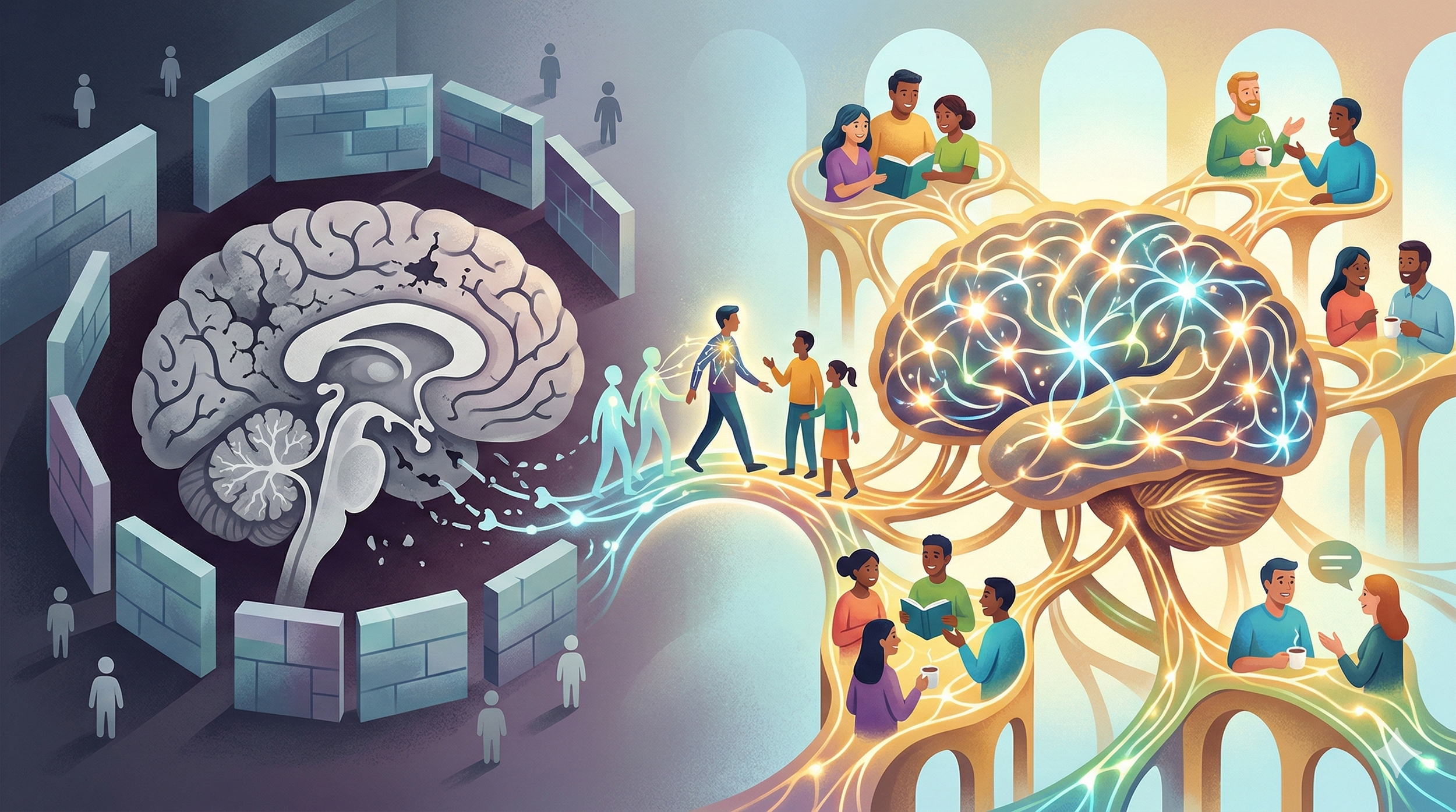
This month, we’re highlighting new research featured in Neuroscience News examining the link between social isolation and cognitive decline. The findings add to a growing body of evidence showing that limited social connection is not just emotionally challenging; it may significantly increase the risk of memory loss and dementia over time.
Key Highlights:
What the research shows: Individuals who experience social isolation have a higher risk of cognitive decline and dementia compared to those who remain socially engaged. Importantly, the risk appears to be associated with objective isolation (limited social contact), rather than simply feeling lonely.
Why it matters for brain health: Regular social interaction stimulates multiple brain networks at once, including those responsible for memory, language, attention, and emotional regulation. When these networks are underused, they may weaken over time. Social engagement, on the other hand, acts as a form of natural cognitive stimulation, helping preserve mental sharpness.
A closer look at the science: Researchers analyzed long-term population data to examine how social isolation impacts brain health outcomes. Even after accounting for other health and lifestyle factors, socially isolated individuals showed a significantly increased risk of developing dementia. The findings suggest that maintaining consistent social contact may be a protective factor for long-term cognitive resilience.
This research reinforces a powerful message: social connection is not a luxury; it’s a biological necessity for a healthy brain. Just as exercise strengthens muscles, meaningful interaction strengthens neural pathways. By prioritizing community, conversation, and connection, we actively support our cognitive health now and in the years ahead.