15 Things Your Brain Needs To Grow Career Success
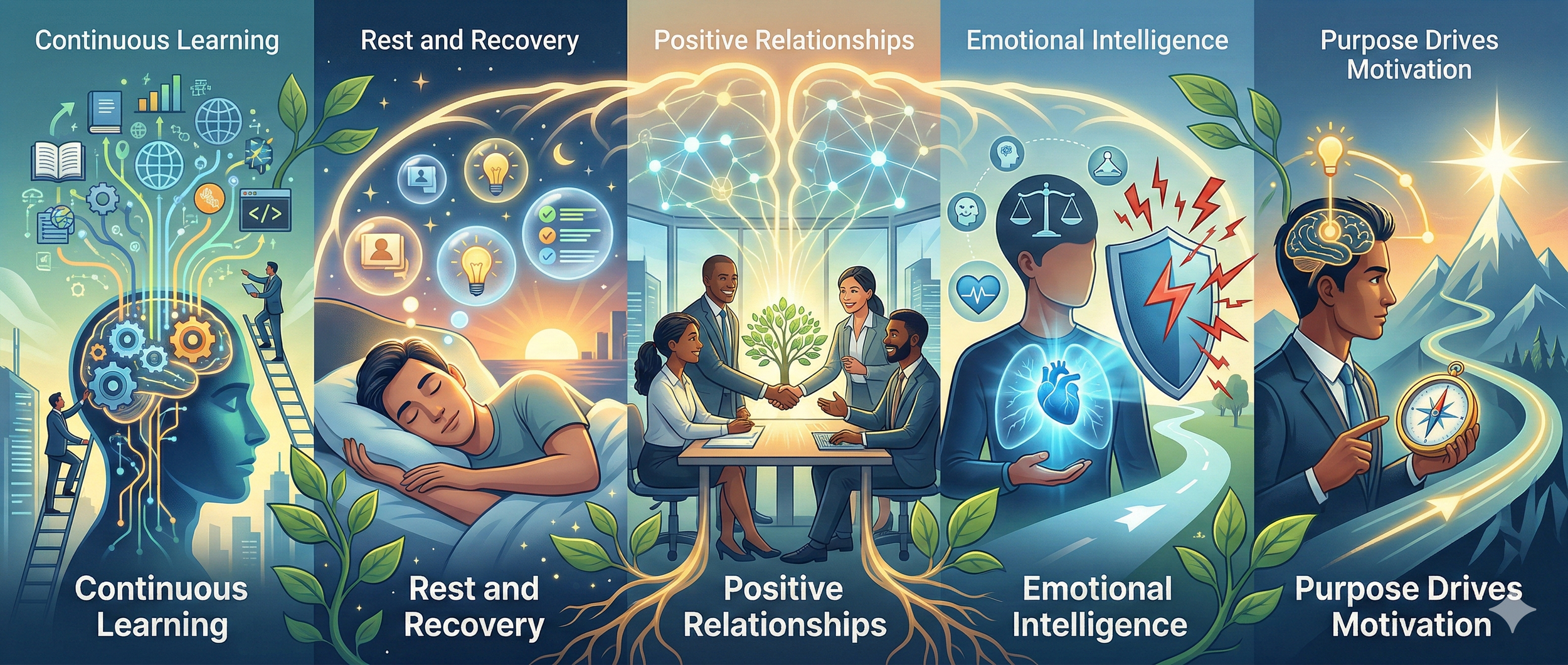
This month’s featured article from Forbes explores an important idea: the same habits that help your brain grow and adapt are also the ones that support long-term career success. Brain health and professional growth are deeply connected because our performance at work depends on cognitive flexibility, emotional regulation, resilience, and lifelong learning.
Here are a few key insights the article highlights:
Continuous learning fuels brain growth: Challenging yourself with new skills, ideas, and perspectives strengthens neural pathways and supports cognitive flexibility, a critical trait for navigating change and innovation in the workplace.
Rest and recovery are essential: Sleep and downtime aren’t signs of laziness; they’re biological necessities. The brain consolidates memory, enhances creativity, and restores focus during periods of rest.
Positive relationships enhance performance: Supportive colleagues and mentors help reduce stress and increase motivation. Social connection activates brain networks involved in emotional regulation and decision-making, improving both well-being and leadership capacity.
Emotional intelligence strengthens resilience: Developing self-awareness, empathy, and stress-management skills helps regulate the brain’s stress response system, allowing for clearer thinking under pressure.
Purpose drives motivation: When work aligns with personal meaning and values, reward pathways in the brain are activated, increasing engagement, persistence, and long-term satisfaction.
This article reminds us that career success isn’t just about productivity; it’s about creating the conditions for your brain to thrive. By prioritizing learning, rest, connection, and purpose, we support not only professional achievement but also long-term cognitive health and resilience.