
Welcome to Holly’s November newsletter!
November draws us further into late autumn, where crisp morning air and falling temperatures signal a distinct shift in rhythm. As snow settles over the ground and the days grow colder, nature prompts us to adapt—reminding us of the constant, dynamic dialogue between our physical environment and our internal physiology.
Just as our bodies work harder to preserve warmth when the temperature drops, our brain function and energy distribution are intimately tied to the thermal conditions around us. From the subtle mental drag that sets in when we are underdressed in cold weather, to the neurochemical surges sparked by deliberate cold-water plunges, ambient temperature exerts a powerful, measurable influence over our cognitive processing, focus, and mood regulation.
In this month’s edition, we explore the science of thermal stress alongside exciting clinical research and learning opportunities:
Cold Temperatures & Cognitive Performance: A featured systematic review from the International Journal of Environmental Research and Public Health uncovers how cold exposure slows attention, processing speed, and executive function well before core hypothermia begins—and why keeping warm protects your mental stamina.
The Science of Deliberate Cold Exposure: We examine a timely review from Molecular Psychiatry assessing cold-water immersion and cold showers, separating biological plausibility from wellness trends to understand their true role in stress pathways, dopamine surges, and emotional resilience.
Cerebrovascular Safety & CBD Research: An inside look at landmark human research co-authored by Dr. Holly Bardutz, presented at the Canadian Society of Exercise Physiologists (CSEP) conference, evaluating CBD’s safety profile and its impact on dynamic cerebral autoregulation.
Upcoming Fall & Winter Events: Reserve your spot for upcoming interactive sessions, including brain health in your 30s & 40s with Dr. Holly Bardutz, midlife hormone health with Dr. Seema Goyal, the foot-brain connection with Dr. Mino Deiana (in-person and virtual), and our festive "Holly Day" holiday gathering in December.
The overarching takeaway this month is that brain vitality is deeply grounded in physiological balance, whether that means layering up against the chill, understanding how acute physical stressors interact with our neurochemistry, or staying curious through ongoing learning; small, informed choices build lasting cognitive resilience.
Inside, you will find full research summaries, practical takeaways, and event registration details to support your brain health through the season ahead.
Here’s to staying warm, thinking clearly, and nurturing vibrant brain health this November.
Did You Know?

This month’s featured article from the International Journal of Environmental Research and Public Health explores a critical yet often overlooked environmental factor in brain function: how exposure to cold temperatures impacts cognitive performance in healthy adults.
As the weather cools down in November, our bodies naturally divert significant energy and physiological resources toward maintaining core temperature. When exposed to cold air or water, the stress placed on the nervous and cardiovascular systems doesn't just trigger shivering—it can alter how quickly and clearly our brains process information. Understanding this link helps us appreciate how deeply our physical environment shapes our mental acuity.
Here are a few key insights from the systematic review:
Cold exposure reliably affects brain function: Across the majority of reviewed studies (15 out of 18), being in a cold environment led to measurable impairments in cognitive performance, showing that the brain's resources shift when contending with thermal stress.
Cognitive decline begins before hypothermia sets in: You do not need to be experiencing accidental or medical hypothermia to feel the mental effects. Notable dips in brain performance occur well before core body temperature drops to dangerous levels.
Attention and processing speed are the first to slow: The review identified attention and mental processing speed as the cognitive domains most consistently affected. When the body is cold, the time it takes to react, scan environments, and register information lengthens.
Complex thinking and memory face extra hurdles: Higher-order cognitive tasks—such as executive functions (decision-making, planning, and problem-solving) and working memory—are also vulnerable to cold-induced distraction and physiological strain.
Medium and duration matter: The effects vary depending on whether the exposure is via cold ambient air or cold water immersion, as well as the duration and severity of the drop in temperature. Water, for instance, extracts body heat significantly faster than air, accelerating cognitive strain.
Acclimation and individual differences are still being unraveled: While physical discomfort and distraction contribute to these mental slow-downs, researchers emphasize that personal variables—including potential cold acclimation, repeat exposure, and physiological differences—are active areas of ongoing research.
This review reinforces an important takeaway for brain health: peak mental performance doesn't operate in a vacuum—it is directly tied to our body’s thermal comfort and external conditions. As colder days settle in, supporting our focus and decision-making can be as straightforward as dressing in warm layers, protecting against sudden cold stress, and staying aware of how ambient temperatures influence our mental stamina.
The Science Behind Brain Health:
Cold Exposure, Stress Pathways, and Mental Health

This month, we’re highlighting new research exploring the growing interest in temperature-based therapies and their relationship with emotional well-being and brain health. A recent review published in Molecular Psychiatry examined whether deliberate cold exposure—such as cold-water immersion and cold showers—serves as a viable lifestyle intervention to help alleviate symptoms of depression, anxiety, and stress-related conditions.
Cold exposure has rapidly gained popularity across the wellness community, often accompanied by strong claims about its ability to reset the nervous system and boost psychological resilience. When the body encounters acute cold, it triggers rapid neurochemical and systemic adaptations, including shifts in stress hormones, neurotransmitter signaling, and inflammatory markers. This review takes a rigorous look at the science behind these bodily responses, assessing where the evidence is genuinely promising and where healthy skepticism is warranted.
What makes this review especially valuable is its balanced, mechanism-first approach. Rather than relying on popular trends or anecdotal endorsements, the researchers evaluated evidence across clinical trials, observational studies, and biological models to separate biological plausibility from proven clinical outcomes.
Key Highlights:
What the research shows: The review noted preliminary evidence for acute mood enhancement, temporary alertness, and short-term stress modulation following cold exposure. However, the broader empirical foundation remains limited. While participants often self-report feeling invigorated or less anxious immediately afterward, these psychological improvements have not been consistently tied to sustained or measurable biological changes.
Why it matters for brain health: The biological rationale behind cold exposure centers on three interconnected physiological systems: the catecholamine system (which drives surges in dopamine and norepinephrine), the hypothalamic-pituitary-adrenal (HPA) axis (which regulates cortisol and the body's stress response), and immune-inflammatory pathways. In theory, repeatedly challenging these systems with controlled, brief cold stressors could help modulate systemic inflammation and build adaptive stress tolerance over time.
A closer look at the science: The authors emphasize that existing studies face substantial methodological hurdles. Most available trials rely on small sample sizes, highly variable protocols (differing water temperatures, immersion times, and frequencies), and lack active control or placebo conditions. Furthermore, much of the existing literature involves self-selected, health-motivated volunteers rather than clinical populations, introducing noticeable selection bias.
The importance of realistic expectations: The findings remind us that widespread popularity does not equate to established medical treatment. While cold water can serve as an invigorating sensory reset or a complementary daily habit, it is not a standalone cure for clinical anxiety or major depressive disorder. Understanding cold exposure as a mild, acute stressor underscores the importance of dosing, safety, and individual tolerance rather than extreme practices.
The long-term impact: The researchers conclude that cold exposure represents a promising, yet still unproven, adjunct for mood regulation. To determine its true therapeutic value, future research will need standardized immersion protocols, active control comparisons, and well-designed clinical trials involving individuals experiencing diagnosed mood and anxiety disorders.
This research reinforces a central theme in brain health: our physical state and emotional resilience are deeply connected through neurochemical and physiological networks. Deliberate cold exposure offers a compelling look at how brief environmental stressors interact with our internal chemistry, highlighting that while the practice holds intriguing potential for daily vitality, the most reliable foundation for mental health remains a comprehensive, evidence-informed lifestyle.
Event Schedule
We have prepared a list of events for this fall, and we would love for you to be part of it.
Why Your 30s & 40s May Be a Critical Window for Lifelong Brain Health with Holly Bardutz
Thursday, November 12 · 12:00 p.m. 1:00 p.m. CST
Led by Dr. Holly Bardutz, this engaging, evidence-based session explores the dynamic interplay of daily lifestyle habits and long-term neuroprotection. (Note that this is offered over the lunch hour for those who are working full-time.)
Optimizing Hormone Health in Midlife and Beyond by Dr. Seema Goyal
Tuesday, November 24 · 10:30 a.m. – 11:30 a.m. CST
In this practical presentation, Dr. Seema will unpack the essential role hormones play in our overall well-being as we age.
Healthy Feet, Healthy Brain: The Surprising Connection with Dr. Mino Deiana - Hybrid Format
Tuesday, December 8 · 1:00 p.m. 2:00 p.m. CST
In this session, Dr. Mino Deiana will uncover the surprising link between lower-limb mechanics and neurological health.
This event will be held virtually via Zoom (as we are used to), and at the same time, for those who are able to, it will also be held in person at the University of Regina.
Christmas & Your Brain: A Little Brain Science, A Little Socialization & Sending You Off with a Little Happy Holiday/“Holly Day” Cheer! with Holly Bardutz
Thursday, December 17 · 10:30 a.m. – 11:30 a.m. CST
Before we break for the holidays, join Dr. Holly Bardutz for a warm, engaging, and lighthearted exploration of Christmas, the holiday season, and your brain.
Recent Research & Recognition:
Advancing Brain Health: New Research on CBD and Cerebrovascular Safety
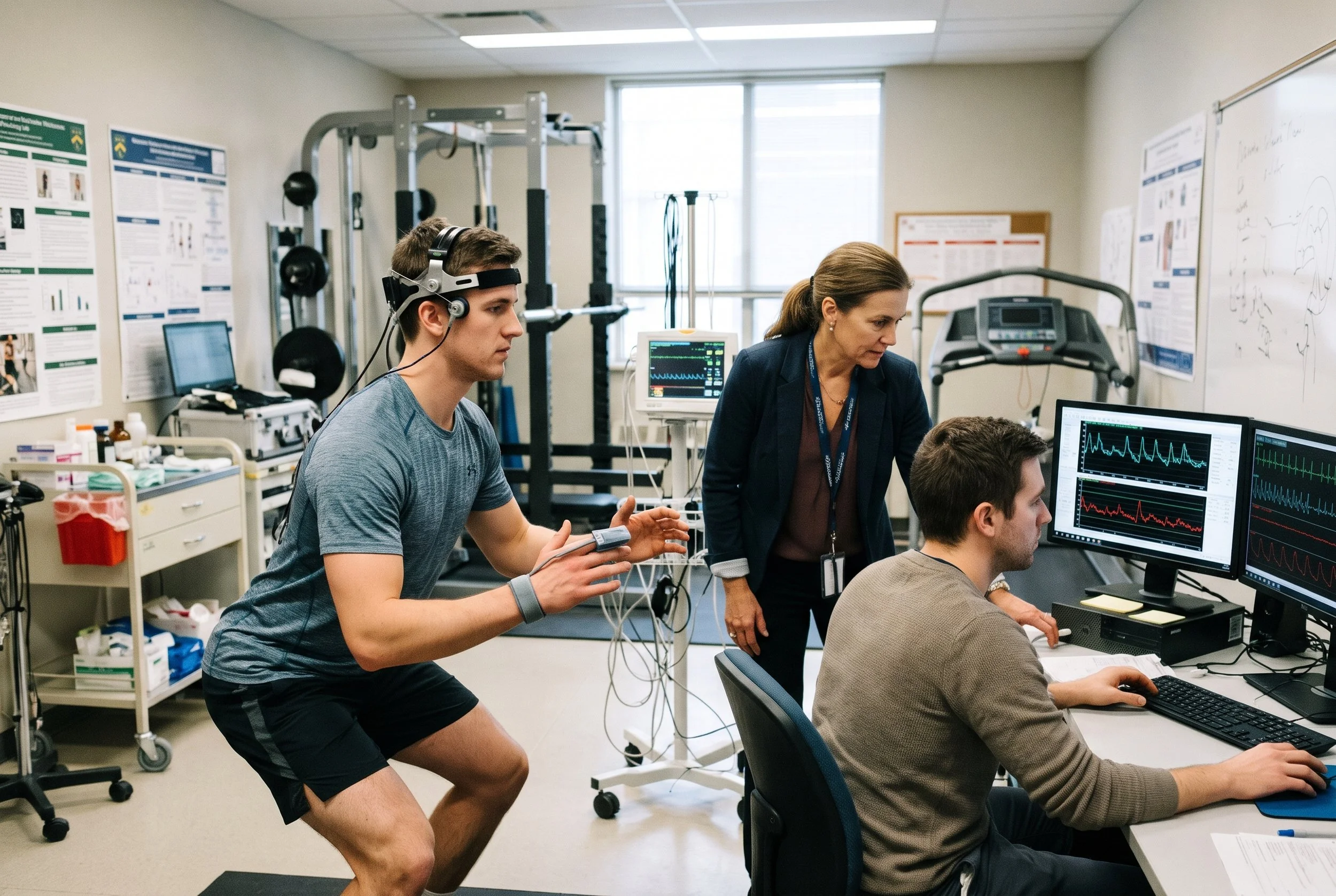
This past week, Dr. Holly Bardutz contributed as a collaborating researcher on an exciting new study presented at the Canadian Society of Exercise Physiologists (CSEP) annual conference in Edmonton, Alberta. Working alongside a distinguished multi-institutional team of physicians, professors, and health scientists spanning the University of Regina, University of Saskatchewan, and the University of British Columbia, Holly co-authored research evaluating the neurological and vascular safety of Cannabidiol (CBD).
Pre-clinical research has highlighted CBD as a promising non-intoxicating compound with neuroprotective, anti-inflammatory, and blood-brain barrier-supporting properties—qualities of high interest for athletes in contact sports and anyone prioritizing long-term brain resilience. However, human trials evaluating how CBD affects brain blood flow under physical stress have been limited.
This landmark study investigated how escalating daily doses of CBD (from 5 to 30 mg/kg/day over 12 weeks) impacted dynamic cerebral autoregulation—the brain’s essential ability to maintain steady blood flow despite changes in blood pressure.
Key Themes & Highlights from the Study:
Pioneering Human Trial: As the first study to examine chronic CBD dose escalation in university-level athletes, this trial bridges a vital gap between laboratory findings and human clinical data.
Cerebral Autoregulation & Blood Flow: Using advanced transcranial Doppler ultrasound and continuous blood pressure monitoring during repeated squat-stand physical challenges, researchers tracked real-time blood flow in the brain.
Safety & Tolerance Confirmed: The findings demonstrated that CBD was well-tolerated across increasing dosages, with no adverse effects on the brain’s natural autoregulatory mechanisms—providing valuable evidence supporting its safety in healthy populations.
Bridging Research and Community Care
Direct involvement in cutting-edge research ensures our community benefits from the newest, most rigorous scientific evidence available. As clinical understanding around compounds like CBD continues to develop, we remain committed to translating emerging data into clear, actionable knowledge you can trust for brain health and vitality.
From Holly and all of us at Community & Company, we hope you’ve enjoyed this month's edition of The Brain Science Bulletin!
If you know someone who would find this newsletter helpful, feel free to share it with them. They can also join our mailing list by signing up at the bottom of our website’s Contact Page.
Thank you for being part of our community. We appreciate you! See you in the next edition.
Warm regards,
Holly Bardutz and the Community & Company Team
“You make your brain, then your brain makes you!”
Disclaimer: The information provided here is for educational purposes only and is not intended as medical advice. Always consult a qualified healthcare professional for medical concerns or treatment.