Creativity Key to Slowing Brain Aging
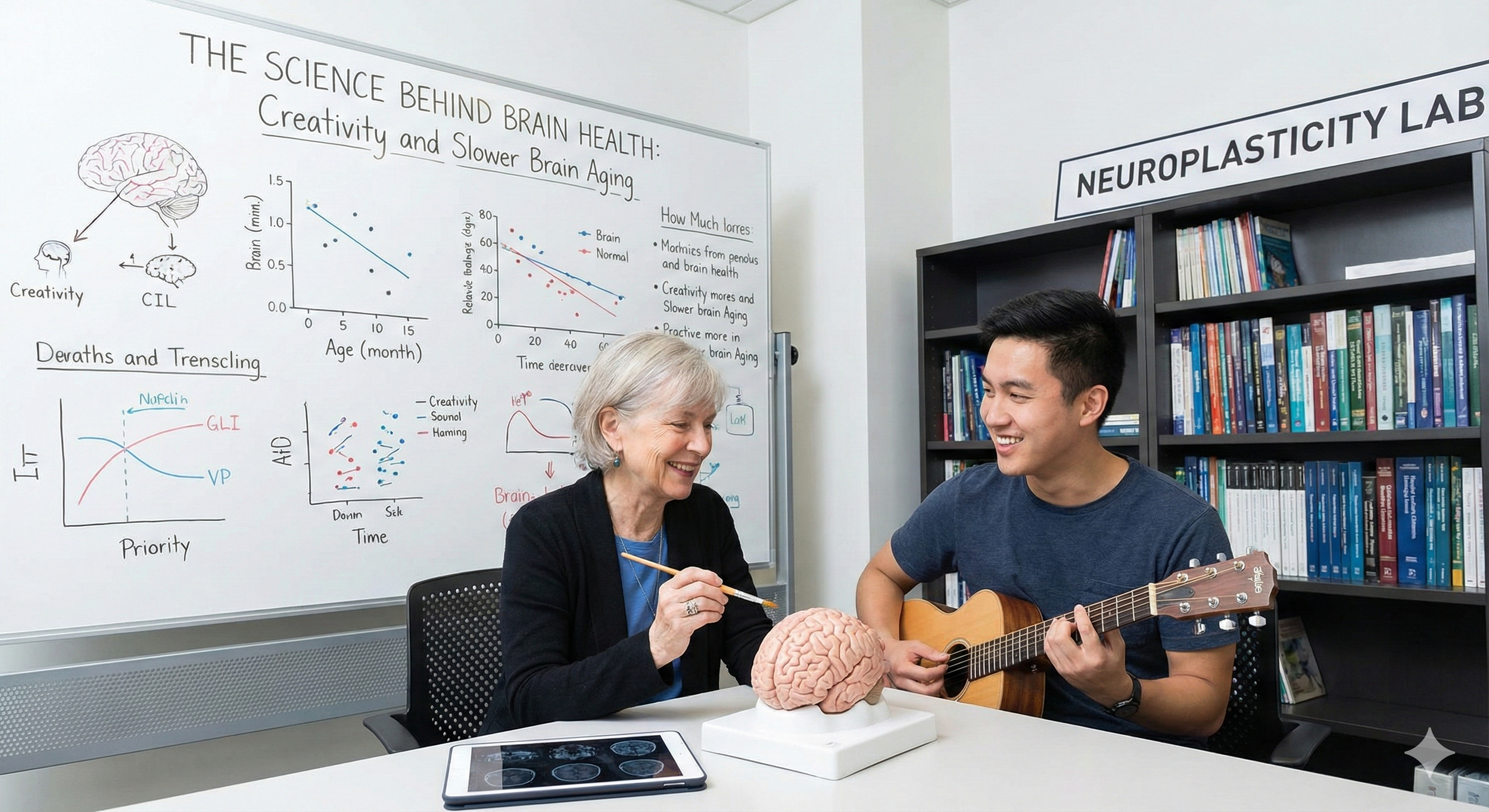
This month, we’re highlighting a fascinating new study featured in Neuroscience News that explores the link between creative engagement and brain aging. The research suggests that regular participation in creative activities, such as dancing, music, visual art, and even strategy-based video games, is associated with delayed brain aging and patterns linked to healthier brain function.
Key Highlights:
What the research shows: Researchers used advanced “brain clocks,” which estimate the biological age of the brain from neuroimaging data. Individuals who regularly engaged in creative activities tended to have younger-appearing brains than those with less creative experience. This effect was strongest among those with long-term involvement in their creative pursuits.
Why it matters for brain health: Creative engagement was linked to increased neural plasticity and greater efficiency in brain networks important for attention, coordination, and problem-solving, areas that are often vulnerable to age-related decline. Even short periods of creative training produced measurable improvements in brain aging markers.
A closer look at the science: The international study analyzed data from over 1,400 individuals across multiple creative domains. Results showed that the more someone practiced creative activities, the stronger the association with delayed brain aging. This suggests that creativity may contribute to maintaining cognitive health in ways similar to physical exercise or enriched learning.
This research is an exciting reminder that creativity isn’t just enjoyable—it may also be a powerful, accessible way to support brain health over time. Whether through art, music, dance, or playful strategic games, engaging your creative mind can help keep your brain resilient and youthful.