The Brain Health Bulletin - May Edition

Welcome to the May edition of Holly’s monthly newsletter!
May in Canada is a season of renewal. The days grow longer, the air feels lighter, and the world around us begins to bloom again. After the stillness of winter, many of us notice a renewed sense of energy and possibility.
Nature’s transition offers an important reminder: renewal is not limited to the world outside us. It is also happening within us, especially in the brain.
Far from being fixed, the brain is a dynamic organ that continually adapts, repairs, and reorganizes itself throughout life. This remarkable capacity for change is at the heart of brain health and resilience.
In this month’s edition, we explore how the brain renews itself, from the role of telomeres in cellular aging, to the importance of timing and repetition in learning and memory, to the ways movement can support recovery after brain injury.
The message is both simple and encouraging: our brains remain capable of growth, healing, and adaptation across the lifespan.
Inside, you’ll find research, insights, and practical strategies to help you support your brain’s natural capacity for renewal.
Here’s to a season of growth, restoration, and lifelong learning.
Did You Know?
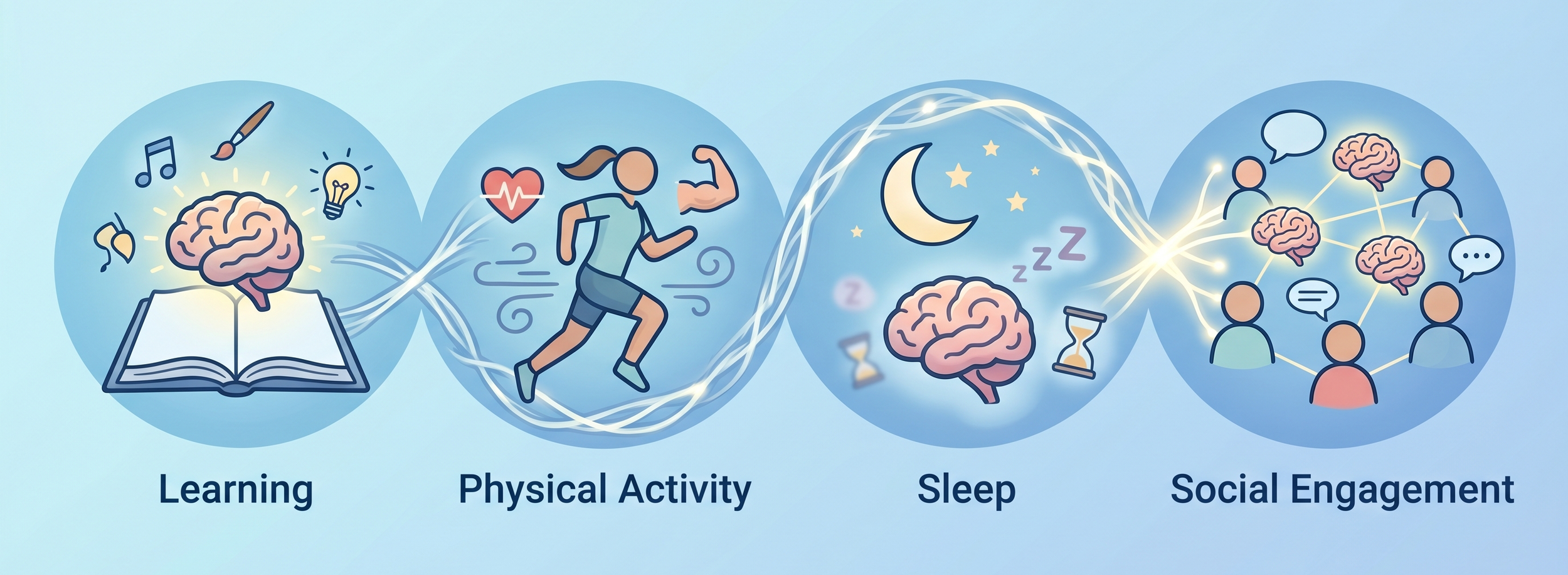
This month’s featured article from Harvard Health Publishing highlights an encouraging truth: your brain remains capable of growth and adaptation throughout your entire life. This remarkable ability, known as neuroplasticity, allows the brain to form new connections, strengthen existing ones, and adapt in response to experience, learning, and lifestyle.
Here are a few key insights from the article:
Your brain can continue to change at any age: Neuroplasticity is not limited to childhood. Even in later life, the brain can reorganize itself, build new neural pathways, and strengthen cognitive function when challenged and supported.
Learning something new strengthens the brain: Whether it’s learning a language, playing an instrument, or mastering a new skill, novel experiences stimulate the brain and help build cognitive reserve.
Physical activity supports brain growth: Regular exercise increases blood flow to the brain and promotes the release of brain-derived neurotrophic factor (BDNF), a protein that supports the growth, survival, and connectivity of brain cells.
Sleep helps the brain adapt and consolidate learning: During sleep, the brain strengthens newly formed neural connections and organizes memories, making rest an essential part of learning and cognitive health.
Social engagement keeps the brain active: Meaningful conversations and social interaction challenge multiple brain systems at once, supporting memory, attention, language, and emotional well-being.
This article reinforces one of the most empowering messages in brain health: it is never too late to support your brain. Through regular movement, lifelong learning, quality sleep, and strong social connections, we can continue to nurture cognitive fitness and resilience across the lifespan.
The Science Behind Brain Health: Healthy Habits, Telomeres, and Brain Aging
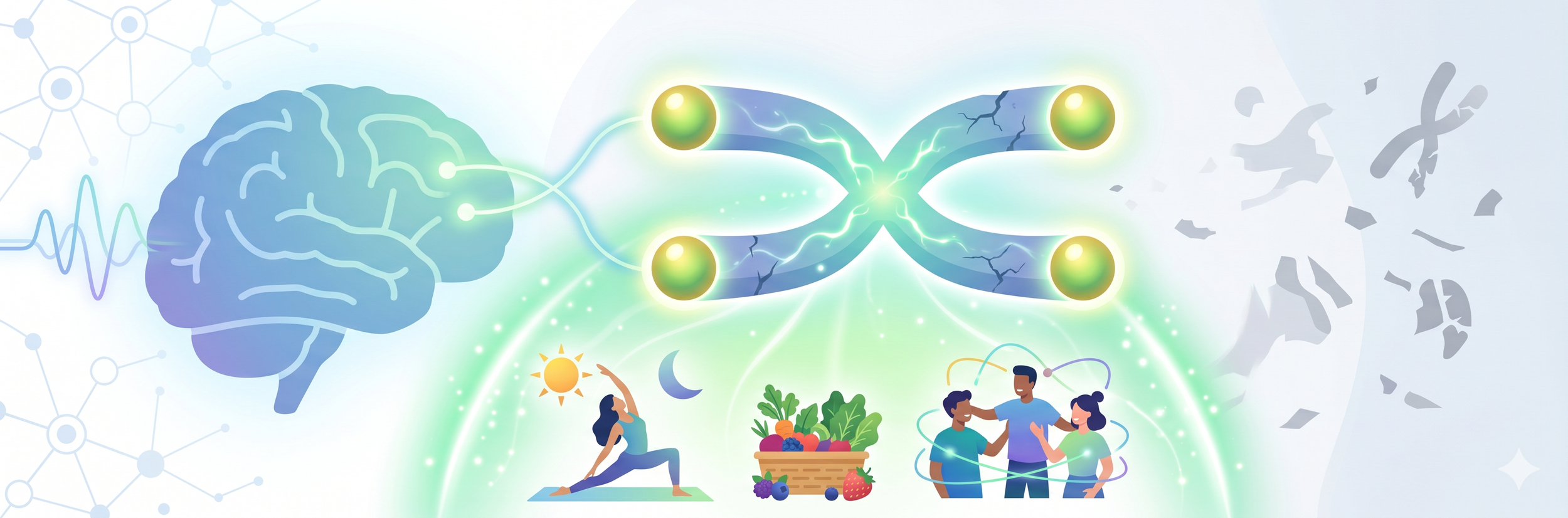
This month, we’re highlighting new research exploring the connection between cellular aging and brain health, and how everyday lifestyle habits may help protect the brain even when biological aging processes are underway.
The study focuses on telomeres, protective caps at the ends of our chromosomes that naturally shorten as we age. Shorter telomeres have been linked to faster biological aging and are often considered a marker of cellular wear and tear. What makes this research especially compelling is its focus on the brain: even when telomeres are shorter, healthy lifestyle habits may help offset their impact on brain aging and cognitive function.
Key Highlights:
What the research shows: The study found that individuals with shorter telomeres, an indicator of accelerated cellular aging, tended to show signs of greater brain aging. However, this relationship was significantly influenced by lifestyle. People who engaged in healthier behaviours showed better brain outcomes, even when biological aging markers were present.
Why it matters for brain health: This research reinforces a powerful idea: biological aging is not destiny. While we cannot stop telomere shortening, we can influence how strongly it affects brain function. Healthy habits appear to act as a protective buffer, supporting cognitive resilience even in the presence of age-related cellular changes.
A closer look at the science: Researchers examined the relationship between telomere length and brain structure and function, alongside lifestyle factors such as physical activity, sleep, diet, and overall health behaviours. The findings suggest that these behaviours may help reduce the impact of cellular aging on brain networks involved in memory, thinking, and processing speed.
The long-term impact: The study adds to growing evidence that lifestyle choices can meaningfully shape brain aging trajectories. Even when biological markers indicate increased risk, consistent healthy habits may help preserve cognitive function and support more stable brain health over time.
This research underscores a key message of this month’s theme: while aging is a biological process, how the brain ages is influenced by how we live. Daily habits, movement, rest, nourishment, and engagement continue to play a powerful role in supporting brain resilience across the lifespan.
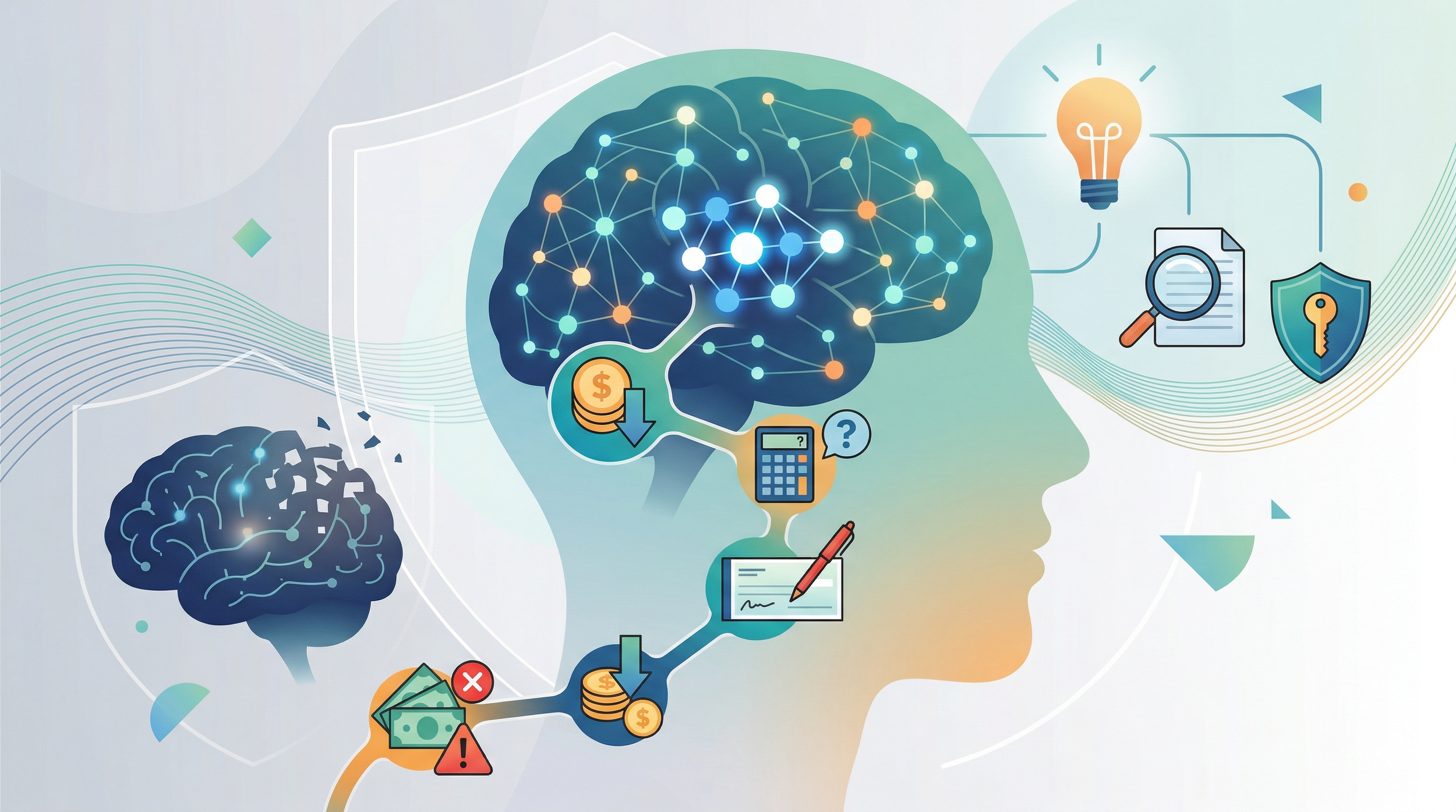
Extra Academic Spotlight: Financial Strain as a Risk Factor for Cognitive Decline
This month’s spotlight article highlights emerging research on one of the most practical and fascinating questions in neuroscience: when is the best time to learn for optimal memory retention? The study suggests that the brain is not only shaped by what we learn, but also by when we learn it.
What the research shows: The study identifies a roughly 24-hour interval as a key window for strengthening memory. Learning that is revisited after this period appears to be more effectively consolidated than information reviewed too soon or too late. This suggests that timing between learning sessions plays an important role in how well information is stored in the brain.
Why it matters for brain health: These findings reinforce a powerful principle of learning: memory is not just about repetition, but strategic repetition. Giving the brain time between learning sessions allows neural processes to stabilize and strengthen connections, making information more durable and easier to retrieve later.
A closer look at the science: Researchers examined how memory performance changes depending on the spacing of learning sessions. They found that revisiting information after approximately one day led to improved retention compared to shorter or irregular intervals. This supports the idea that memory consolidation continues long after initial learning, and benefits from structured timing.
The real-world impact: This research has practical implications for how we approach learning in everyday life, from studying new material to acquiring skills to supporting cognitive health as we age. It suggests that small adjustments in when we review information can significantly improve how well we retain it over time.
This study adds an important layer to our understanding of brain health and learning: it’s not only what we do that matters for the brain, but also when we do it. By aligning learning with the brain’s natural consolidation rhythms, we can support more efficient, lasting memory formation across the lifespan.
Recent Research & Recognition: Physical Activity and Recovery After Concussion
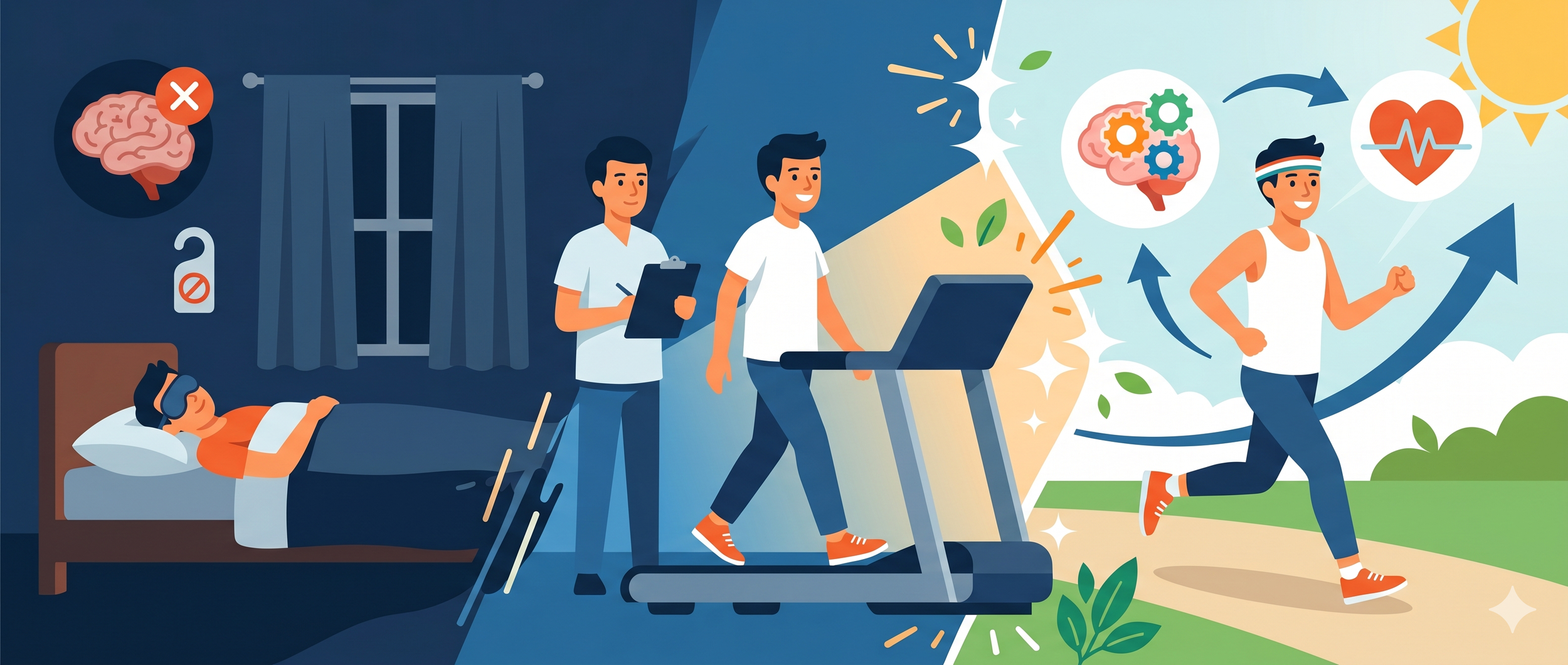
This month, we are proud to highlight a significant new publication in the field of brain recovery: “Physiological Outcomes of Physical Activity Interventions in Persistent Postconcussive Symptoms: A Scoping Review,” published in Sports Medicine. We are especially excited to celebrate the contributions of Dr. Patrick Neary and Dr. Jyotpal Singh, both of whom have been esteemed guests and collaborators at our past events.
For years, the standard advice for anyone suffering from a concussion was "cocooning", total physical and cognitive rest in a dark room until symptoms vanished. However, this new research reinforces a major shift in brain health: movement is often the best medicine. While rest is crucial in the very early stages, this scoping review explores how specific, structured physical activity can objectively improve physiological outcomes for those dealing with persistent symptoms.
The research focuses on how exercise impacts two critical systems: cardiovascular autonomic responses and cerebral autoregulation (the brain’s ability to maintain stable blood flow despite changes in blood pressure). When these systems are disrupted after an injury, patients often experience the lingering dizziness, "brain fog," and headaches associated with Persistent Postconcussive Symptoms (PPCS).
By analyzing how different types of physical activity, such as sub-symptom threshold aerobic exercise, interact with these physiological pathways, Dr. Neary, Dr. Singh, and their colleagues are helping to provide a roadmap for more effective, data-driven rehabilitation.
This research aligns perfectly with our mission in the Brain Health and Wellness Lab: moving away from subjective "wait and see" approaches and toward proactive strategies that strengthen the brain’s resilience. Just as we discussed in our recent sessions on neurolinguistics and social engagement, the brain thrives on stimulation. Whether it is the "workout" of a complex conversation or the physiological benefits of a guided exercise program, keeping the brain active and blood flowing is key to long-term recovery.
We are incredibly grateful to have experts like Dr. Neary and Dr. Singh in our community, pushing the boundaries of what we know about brain repair and helping us all understand that recovery is not just a destination, but an active process.
From Holly and all of us at Community & Company, we hope you’ve enjoyed this month's edition of The Brain Science Bulletin!
If you know someone who would find this newsletter helpful, feel free to share it with them. They can also join our mailing list by signing up at the bottom of our website’s Contact Page.
Thank you for being part of our community. We appreciate you! See you in the next edition.
Warm regards,
Holly Bardutz and the Community & Company Team
“You make your brain, then your brain makes you!”
Disclaimer: The information provided here is for educational purposes only and is not intended as medical advice. Always consult a qualified healthcare professional for medical concerns or treatment.